
The holidays have a way of exposing how overworked your nervous system has been all year. If you're dreading the next few weeks more than looking forward to them, that might be a signal from your body asking you to meet an unmet need. I work with a lot of patients across Kirkland and the surrounding Eastside who carry anxiety and nervous system dysregulation for months, and the holidays are often when it comes to the surface.
Why the Holidays Amplify Anxiety for People Who Are Already Running on Empty
Understanding why this happens is the first step, but understanding alone doesn't change what your nervous system is actually doing. Awareness allows you the space to begin making a change.
The Nervous System Science Behind Holiday Overwhelm
Your nervous system doesn't distinguish between a work deadline and a family gathering the way your conscious mind does. If you're already walking around in a low grade fight or flight state (called Sympathetic Dominance), which is far more common than most people realize, the holidays add more inputs on top of a system that didn't have much capacity left to begin with. More obligations, more noise, more decisions, and more people are all landing on a baseline that was stretched thin at the start.
That's why the anxiety or exhaustion you feel this time of year often isn't really about the holidays themselves. It's related to a nervous system that's been running in the red for a while, months in a lot of cases, and the season just makes that a lot harder to ignore because you don’t have a lot of buffer to absorb this extra load.
I see this most clearly in patients who describe themselves as fine most of the year, just busy, and then hit a wall sometime in December that seems to come out of nowhere. It might feel sudden, but it's the accumulation finally showing up somewhere visible.
Why Willpower Alone Doesn't Calm a Dysregulated Nervous System
This is the part that trips people up the most. You can't think your way out of a dysregulated nervous system any more than you can think your way out of a fever. Telling yourself to relax, or to just get through it, doesn't actually change what your body is doing underneath that effort, because the nervous system isn't operating on the same logic as your conscious thoughts.
The nervous system responds to information it can actually track and adjust to, not to willpower alone. That's exactly where biofeedback comes in, because it gives your body something concrete to work with instead of asking it to simply calm down on command.
What Biofeedback Therapy Actually Does, and Why It's Different From Talk Therapy
Here's what that looks like once you're in a session, and why it works differently than simply talking through your stress. As a naturopathic doctor in Kirkland, I use biofeedback alongside other tools rather than as a stand alone fix.
Seeing Your Own Stress Response in Real Time
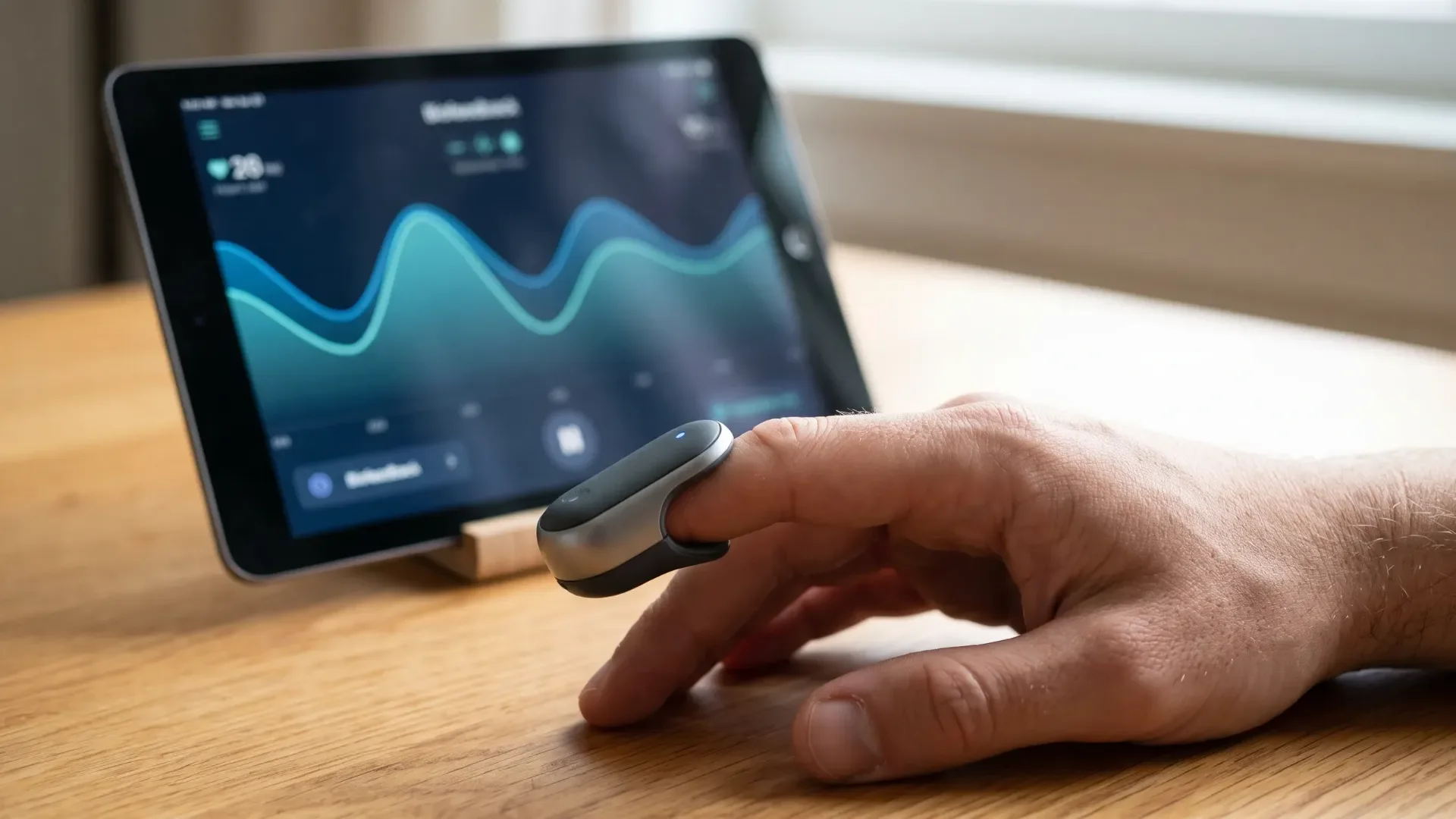
Our biofeedback therapy sessions use sensors to show you, in real time, what's happening in your body. We’ll look at things like heart rate, muscle tension, and breathing patterns while you practice specific techniques to shift them. Instead of talking about stress in the abstract, you're watching your own nervous system respond on a screen in front of you, and learning what actually moves the needle for your body specifically, not a generic technique that may or may not apply to you.
That immediate feedback loop is what makes biofeedback different from a lot of other approaches. You're not guessing whether a breathing technique is working; you can see it change your heart rate in the moment, which makes the skill something you can actually trust and repeat on your own later, long after the session ends. Sometimes, your own physical and emotional experience in your body is the biofeedback tool, and this connection can be more powerful than any technology.
Over a series of sessions, most patients start to recognize the early signs of their own stress response before it fully takes over, which is often the real turning point. You stop reacting to stress after the fact and start catching it earlier, while you still have room to do something about it.
Who Biofeedback Helps Most: Anxiety, Burnout, and Chronic Tension
I see biofeedback help most with anxiety that feels physical as much as mental, with symptoms like racing heart, tight chest, trouble sleeping, and the kind of anxiety that doesn't respond well to just talking it through. It's also effective for burnout, where someone feels wired and exhausted at the same time, and for chronic tension that's settled into the shoulders, jaw, or stomach without an obvious single cause.
It's not a replacement for addressing what's actually driving your stress long term, whether that's workload, a life transition, or something else entirely. But it gives you a concrete, measurable tool for managing the physical side of your stress while we work on the rest.

What a Biofeedback Session Actually Looks Like
To make this less abstract, here's what a session at our office looks like from start to finish.
How a Typical Session Is Structured
A session starts with sensors placed on your fingers or chest (nothing invasive) that track your heart rate variability, breathing, and muscle tension on a screen you can see in real time. We start by establishing your baseline, what your stress response looks like before any intervention, and then practice specific breathing and relaxation techniques while watching how your body responds to each one. Some techniques will shift your numbers noticeably within a minute or two, others take more practice, and that variation is useful information in itself about how your particular nervous system responds.
Combining Biofeedback With Nutritional and Nervous System Support
Biofeedback tends to work best as part of a broader picture rather than on its own. If your anxiety is tangled up with blood sugar swings, inflammation, or nutrient depletion from chronic stress, which is common, addressing those alongside biofeedback usually gets you further than either approach would on its own. This fits with how naturopathic medicine approaches root causes more broadly. We'll talk during your intake appointment about what combination of modalities makes sense for you based on everything you are dealing with.

You Don't Have to White-Knuckle Through Another Stressful Season
If the thought of the next few weeks already has your stomach in knots, that's real information about where your nervous system stands right now, not a personal failing. You don't have to just grit your teeth and get through it the same way you have in past years, hoping it feels easier next time without actually changing anything.
Let's find out what your nervous system might need right now. Book a visit before the season gets fully underway, not after it's already worn you down. You can also browse our blog for more on nervous system support and what we offer beyond biofeedback.